
Why Build Your Own AR-15?
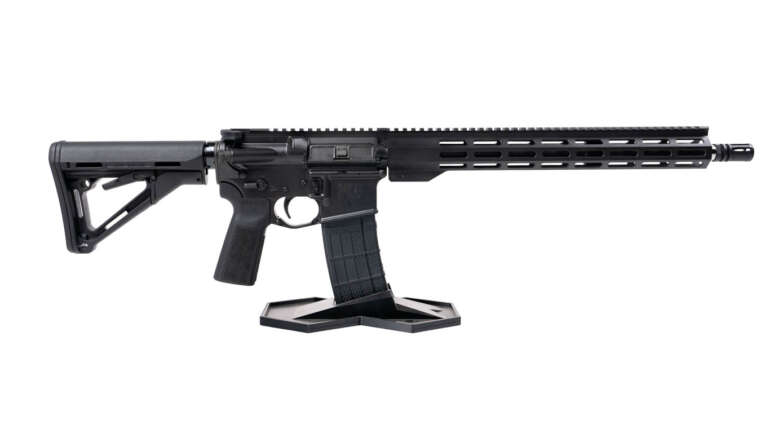
Building your own AR-15 offers numerous advantages over purchasing a complete rifle. The cost can often be lower than buying a comparable complete rifle, and you have full control over which components to use. Building your own rifle also provides educational value—understanding how your rifle is assembled gives you confidence in maintenance and repairs.
Additionally, the AR-15 platform is modular, allowing you to build exactly the rifle you want rather than compromising with pre-made options. Whether you prioritize accuracy, lightweight handling, durability, or aesthetics, building allows you to customize every aspect of your rifle.
Building an AR-15 requires some basic tools and knowledge, but the process is straightforward enough that beginners can complete it successfully with proper guidance. Understanding each step and the purpose of each component will make the building process more enjoyable and ensure your finished rifle functions reliably.
Essential Tools for AR-15 Assembly
You don’t need an extensive toolset to build an AR-15. Essential tools include a punch set (at least 1/16-inch and 3/32-inch punches), a rubber mallet, a vice with protective jaws, an armorer’s wrench for barrel installation, and a torque wrench for critical fastener specifications. Safety glasses are mandatory to prevent punch marks or spring-loaded parts from striking your eyes.
A quality workbench with good lighting is important for precise assembly. Take your time with each step and never rush the building process. A detail punch or punch set is perhaps the most critical tool—punch errors can damage components irreparably.
Many builders invest in specialized tools over time, such as barrel-vise clamps, upper-receiver wrenches, and chamber-plug tools. However, these are not necessary for basic assembly. Focus on having quality basic tools before starting.
Lower Receiver Assembly: The Foundation
Begin with the lower receiver, which is the regulated component of the AR-15 and requires a firearms license to purchase. The lower contains the trigger group, hammer, springs, and pins—all critical to reliable function.
Start by installing the trigger group. Remove the fire control pins from the packaging and identify each component: the trigger, hammer, springs, and pins. Study diagrams or videos showing proper orientation. Install the hammer and trigger in the lower, then carefully install the springs, ensuring they are positioned correctly.
Install the trigger group pins using your punch set and rubber mallet. The front trigger pin should move freely, and the rear hammer pin should rotate to lock. Test movement—the trigger should pivot smoothly, and the hammer should move freely between firing and safe positions.
Next, install the selector switch, safety lever, magazine release, and pistol grip. Each component has a specific orientation and order. Follow manufacturer diagrams precisely to avoid assembly errors. Check that the safety lever moves smoothly between safe and fire positions.
Finally, install the bolt catch, bolt release, and stock-mounting hardware. The stock-mounting tube should be secured with a castle nut tightened to specification. Install the buffer spring and buffer into the stock-mounting tube.
Upper Receiver Assembly: The Bolt Carrier Group
The upper receiver contains the bolt carrier group, charging handle, and barrel. Begin by installing the charging handle into the upper receiver. The handle should move smoothly in both directions with a satisfying mechanical feel.
The bolt carrier group is the heart of the rifle’s operation. Inspect the bolt carefully—the firing pin should move freely, and the bolt-locking lugs should be intact. The bolt carrier group should be clean and lightly lubricated. Install the bolt carrier group into the upper receiver, ensuring it sits properly in the receiver rails.
Install the forward assist and dust cover. The forward assist allows you to manually push the bolt into full battery if needed. The dust cover protects the charging handle opening from debris.
Barrel Installation and Handguard Assembly
Installing the barrel requires an armorer’s wrench and possibly a barrel-vise tool to secure the barrel during installation. The barrel is installed into the upper receiver using a barrel nut tightened to specific torque specifications (typically 70-80 foot-pounds).
After barrel installation, install the gas tube and front sight base if using iron sights. The handguard slides over the barrel and is secured to the upper receiver. Modern free-floating handguards do not contact the barrel, which improves accuracy.
Secure the handguard using the provided fasteners. Tighten evenly to ensure the handguard is straight and does not shift. Over-tightening can crack plastic handguards, so tighten only until snug.
Final Assembly and Testing
Attach the upper receiver to the lower receiver using the two take-down pins. These should fit with a snug click, indicating proper alignment. Test the action—the trigger should move freely, the hammer should fall, and the safety should operate smoothly.
Perform a function check with the action open and no ammunition present. Pull the charging handle and ensure the bolt cycles smoothly. Press the trigger and verify the hammer falls. Check the safety operation in both positions.
Install a magazine and test magazine operation. The magazine should lock firmly in the magazine well and release smoothly when the magazine release is pressed.
G2 Precision Firearms offers complete components and parts for AR-15 builds, as well as guidance for builders looking to assemble their own rifles. Whether you’re sourcing components individually or choosing a complete build kit, quality components ensure your finished rifle will function reliably.
Final Considerations
After assembly, take your completed rifle to a qualified gunsmith or manufacturer for inspection before firing. Having your build inspected ensures everything is properly assembled and torqued to specification. Many gun ranges and manufacturers offer this service.
Your first AR-15 build is an accomplishment to be proud of. The knowledge gained through building ensures you understand your rifle and can maintain it properly throughout its operational life. Enjoy your completed rifle and the satisfaction of knowing you built it yourself.