
The Role of Protective Finishes in Firearm Longevity
Firearm finishes serve multiple critical purposes: protecting metal components from corrosion, enhancing durability, and providing aesthetic appeal. The finish you choose significantly impacts how well your rifle resists environmental exposure and how long it maintains its appearance and function. Understanding the characteristics of modern firearm finishes will help you make an informed choice when building or purchasing a rifle.
Anodizing: The Traditional Standard
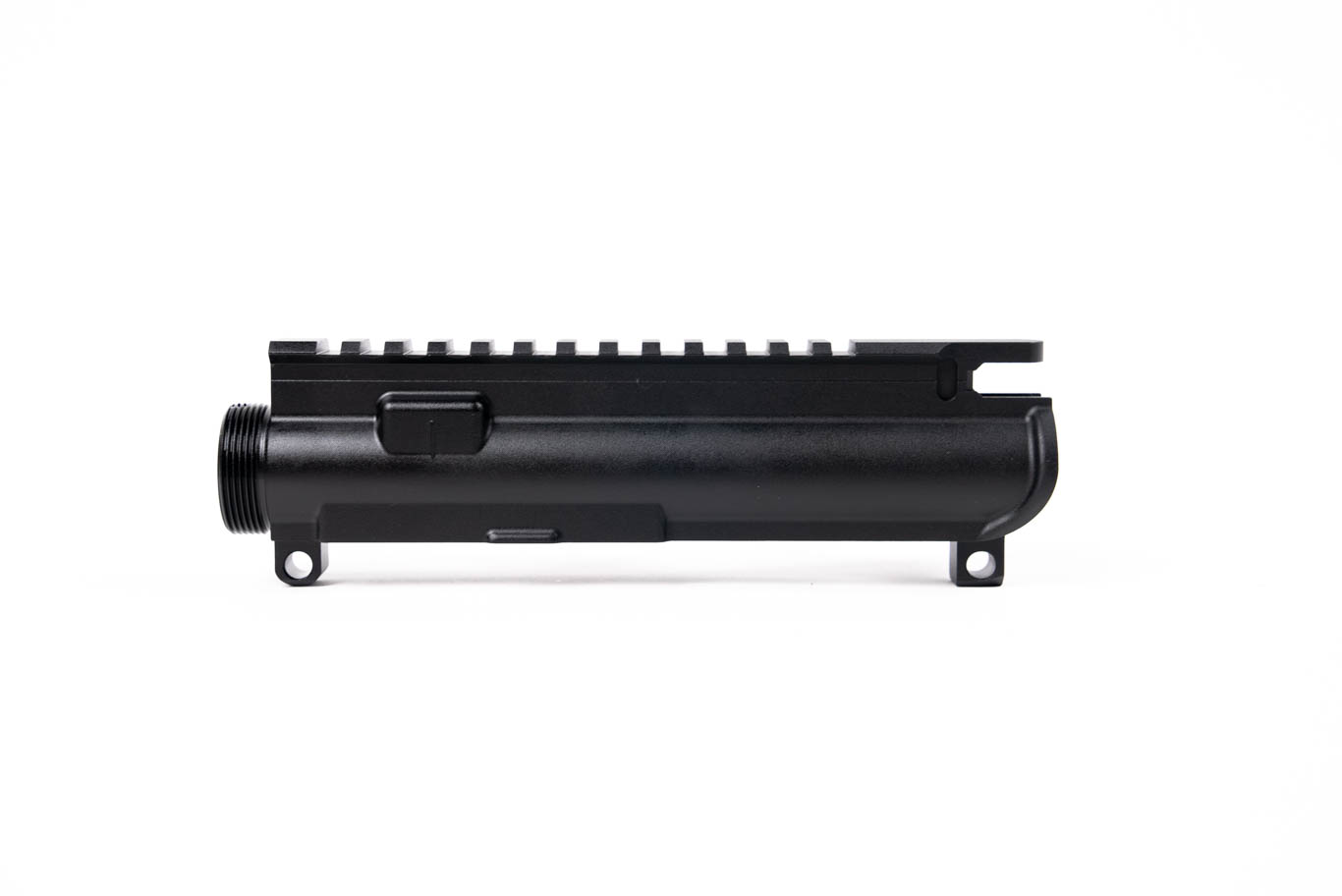
Anodizing is an electrochemical process that creates a protective oxide layer on aluminum surfaces. This process has been used in firearms manufacturing for decades and remains the most common finish for AR-15 upper and lower receivers. Anodizing creates a hard, corrosion-resistant surface that protects the underlying aluminum from oxidation and environmental exposure.
Type II anodizing, the most common specification for firearms, creates a layer approximately 0.0005 inches thick. Type III hard anodizing creates a thicker, more durable layer but is less commonly used due to cost considerations. Both types provide excellent corrosion protection, especially in military and civilian field environments.
Anodizing offers several advantages. The process is cost-effective, widely available, and maintains excellent color consistency. Anodized finishes are relatively easy to repair if damaged, as localized touch-ups can blend reasonably well. The finish integrates with the aluminum itself rather than sitting on top, making it highly durable and resistant to chipping or peeling.
The primary limitation of anodizing is that it only protects aluminum and cannot be applied to steel components. Additionally, anodizing can eventually wear through with heavy use, particularly on high-contact areas like the lower receiver or bolt carrier group where mechanical wear occurs.
Cerakote: Modern Ceramic Coating Technology
Cerakote is a ceramic-based coating that has gained significant popularity in the firearms industry over the past decade. This finish can be applied to both aluminum and steel components, providing comprehensive protection across all parts of a rifle. Cerakote creates an extremely hard, durable ceramic layer that resists scratches, impacts, and corrosion.
One of the primary advantages of Cerakote is its aesthetic versatility. The coating is available in virtually any color imaginable, allowing shooters to customize the appearance of their rifles. Cerakote finishes can replicate camouflage patterns, create two-tone effects, or provide striking solid colors that would be impossible with traditional finishes.
Cerakote provides exceptional durability. The ceramic coating is significantly harder than anodizing and more resistant to abrasion. Rifles finished in Cerakote maintain their appearance through heavy use better than anodized alternatives. The coating is also more resistant to corrosion in harsh environments, including salt spray exposure.
The disadvantages of Cerakote include higher cost and the fact that repair or touch-ups are more difficult. Matching colors exactly for repairs is challenging, and touching up Cerakote can be problematic because the coating does not blend seamlessly like anodizing repairs. Additionally, Cerakote application requires professional facilities with proper ventilation and curing equipment.
DLC: Diamond-Like Carbon Coating
DLC (Diamond-Like Carbon) coating is a thin, hard carbon-based finish increasingly used on critical firearm components, particularly bolt carrier groups and firing pins. DLC creates an extremely hard, low-friction surface that enhances reliability and reduces wear on moving parts.
DLC finishes provide superior hardness compared to both anodizing and Cerakote. The coating reduces friction between moving components, which can improve cycling reliability and reduce maintenance requirements. Many premium rifle manufacturers apply DLC to bolt carrier groups specifically for these benefits.
The primary limitation of DLC is that it is typically applied only to steel components and is generally reserved for critical moving parts rather than receiver and barrel finishing. The coating is also expensive and requires specialized equipment for application. DLC is often combined with other finishes on modern rifles, providing maximum protection across all components.
Comparing Performance Characteristics
For corrosion resistance in standard environments, all three finishes provide excellent protection. In harsh environments with salt spray or extreme humidity, Cerakote and DLC offer superior corrosion resistance compared to anodizing.
For durability and abrasion resistance, DLC is the hardest, followed by Cerakote, then anodizing. For cost-effectiveness, anodizing remains the most economical choice. For aesthetic customization, Cerakote offers unmatched versatility.
G2 Precision Firearms uses high-quality finishes on all components, selecting the appropriate finish for each application to optimize both protection and performance. Whether anodized, Cerakote, or DLC finished, G2 components are protected with professional-grade finishes designed to last.
Choosing the Right Finish for Your Rifle
Select your finish based on intended use, environment, and budget. For general shooting and standard field use, anodizing provides excellent protection at a reasonable cost. For shooters wanting maximum corrosion resistance and aesthetic customization, Cerakote is worth the additional investment. For serious competitors and those building precision rifles, combining quality anodizing on receivers with DLC on critical components provides maximum performance.
Any of these modern finishes will protect your rifle effectively. Choose based on your priorities and requirements, knowing that quality finishes ensure your rifle will maintain its appearance and function for years of reliable use.